
 wczz1314
编者按:针对日本首相高市早苗的涉台言论,清华大学战略与安全研究中心研究员周波在《南华早报》发文驳斥。周波认为,在没有美军支持的情况下,日本自卫队绝无能力与解放军抗衡。从法理上看,日本也缺乏行使集体自卫权的充分理由。周波指出,台海局势目前维持着多重的战略模糊。中国政府视和平统一为首选,美国既威慑“台独”又劝阻中国大陆“武统”,而日本等美国盟友在后者自身立场未定前,也不愿做出具体的军事承诺。
周波强调,高市所谓“台湾有事就是日本有事”完全是本末倒置。如果日本将介入台海视为既定事实,只会招致一场日本注定失败的冲突。高市的言论是基于国内政治考量的表演,注定只是短命日本政治周期中转瞬即逝的涟漪。
【文/观察者网专栏作者 周波,翻译/北京对话 王凡非)
围绕日本首相高市早苗上个月的涉台言论,中日之间爆发了激烈的口水战。暂且撇开这些喧嚣不谈,有一个简单的问题亟待回答:如果失去了美国的军事支持,日本自卫队真的承担得起与中国解放军一战的后果吗?
高市早苗的答案似乎是肯定的,即日本军队必须这么做。根据2015年9月日本国会通过的安保法案,即便本土未受直接攻击,日本也被允许有限度地行使集体自卫权。
行使这一权利有三个前提条件:
一、针对与日本关系密切的外国的攻击威胁到日本的存亡;二、没有其他适当手段来击退攻击并确保日本的存亡及保护其人民;三、武力的使用必须限制在必要的最小范围内。
台湾当然不是一个“外国”。即便台海爆发冲突,几枚流弹意外落入与那国岛附近海域(日本最西端的有人岛),这又怎能被解读为威胁到了日本的“国家存亡”?
就在日本通过安保法案的同一年,几枚来自缅甸政府军的炮弹落入云南省的一个村庄,造成五名村民受伤。中国政府将其视为意外事件,此事最终得以低调处理。
中日之间唯一的领土争端在于钓鱼岛。尽管双方的海警船均在该岛海域巡航,但两国军方一直保持着某种默契,即都不派遣海军舰艇进入争议海域。

如果中日两国因领土争端而大打出手的可能性都微乎其微,那么因为台湾问题而开战就更是荒谬至极了。退一万步讲,即便真的开战,日本在任何情况下都不可能获胜。
况且,如果中国将日本军事介入台湾问题视为既定事实,解放军为何不先发制人打击日本自卫队?高市早苗鼓吹日本介入的可能性,恰恰是在招致她声称想要避免的冲突。
围绕台湾问题,存在着来自中国、美国及美国在亚洲盟友的三重“战略模糊”。 从大陆面对民进党连续两届执政,却依然提及两岸和平中可以看出,中国政府视和平统一为最佳结果,并坚信时间在自己这一边。
美国的战略模糊则是双重的。首先是其“一个中国政策”,该政策足够圆滑,似乎可以随时变换形式。其次是美方始终拒绝明确表态一旦解放军发起攻击,美方是否会军事协防台湾。
这种做法既是为了以此威慑台湾不要宣布“独立”,也是通过保留美军介入的可能性来劝阻中国不要武力统一。
此外还有美国的亚洲盟友。日本有义务在战争爆发时提供后勤支援和基地。然而,当五角大楼官员在7月向日本和澳大利亚施压,要求其通过阐明一旦中美因台湾问题开战它们将扮演何种角色时,两国均未对假设性的军事冲突做出预先承诺,并表示任何决定都必须由届时的政府做出。
这种拒绝选边站队的做法是可以理解的,毕竟当美国自身都保持战略模糊时,盟友几乎没有理由要把自己搭进去。
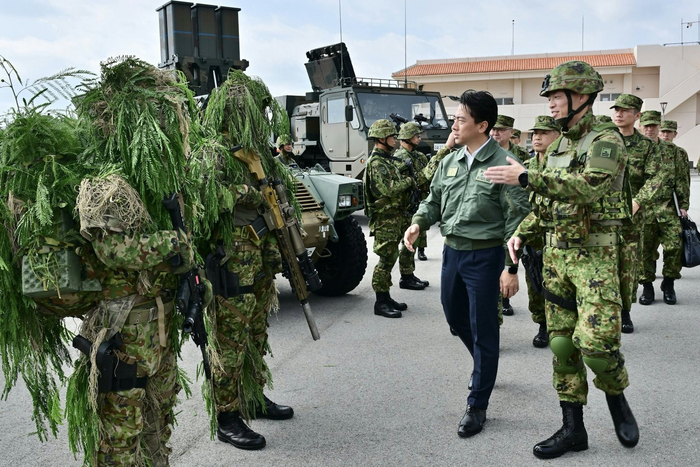
11月23日,日本防卫大臣小泉进次郎视察位于冲绳县与那国岛的自卫队驻军。X@shinjirokoiz
多方多层的战略模糊产生了一种连锁反应。只要中国大陆认为和平统一仍有可能,就不太可能对台湾动武。
若非局势恶化至此,美国就没有必要放弃其战略模糊。而只要美国维持这种战略模糊,日本在此刻炒作台湾问题就没有什么意义。
2022年2月,日本前首相安倍晋三在接受日本电视台采访时,呼吁美国放弃在协防台湾问题上的战略模糊。
安倍重申了他那句老生常谈的“台湾有事就是日本有事”,声称中国大陆在台湾周边建立海空优势将影响日本的领海。这完全是本末倒置。
事实上,随着台湾的重要性在一位更加奉行孤立主义的美国总统治下逐渐减弱,美国可能会反其道而行之,走向更大的战略清晰。
特朗普希望与中国在贸易问题上达成“大交易”,这使他有强烈的动机不去支持对抗中国大陆,以免被拖入台海战争。
据《华尔街日报》报道,特朗普在与高市早苗的通话中告诫她要“收敛”在台湾问题上的调门。那次通话发生在特朗普与习近平主席通话数小时之后。不出所料,日本政府官员否认了报道中的说法。
高市早苗关于台湾的声明是一种政治行为,旨在巩固其在日本国内受众中的地位。这不会作为有益的政治遗产载入史册。在一个首相任期往往不满一年的国家,她的言论不过是即将消逝的涟漪罢了。
【翻页查看英文原文】
Putting aside the ongoing war of words between Beijing and Tokyo surrounding Japanese Prime Minister Sanae Takaichi’s statements on Taiwan last month, there is a simple question that needs answering. Can Japan’s Self-Defence Forces really afford to fight the People’s Liberation Army (PLA) without American military support?
Takaichi’s answer appears to be that Japan’s military must do so. The legislation approved by Japan’s Diet in September 2015 allowed the country to exercise its right of collective self-defence – albeit only to a limited degree – even if Japan is not directly attacked.
There are three conditions on acting on this right: if an attack against a foreign country with which Japan has close relations threatens Japan’s survival; if there is no other appropriate means to repel the attack and ensure Japan’s survival and protect its people; and that the use of force must be limited to the minimum extent necessary.
Taiwan is not a foreign country, of course. Even if a conflict did break out across the Taiwan Strait and a few stray bombs accidentally fell into the waters off Yonaguni, Japan’s westernmost inhabited island, how could that be interpreted as a threat to Japan’s survival?
The same year that Japan passed its self-defence legislation, a few artillery shells from Myanmar government forces landed in a village in Yunnan province, injuring five villagers. The issue was resolved quietly because the Chinese government saw it as an accident.
The only territorial dispute between Beijing and Tokyo is over the Diaoyu Islands, which Japan calls the Senkakus. Although both have coastguard ships sailing in the waters off the islands, the two militaries have maintained a kind of tacit agreement of not sending their naval vessels into the disputed waters.
If the prospect of China and Japan coming to blows over disputed territory is so unlikely, it would be ridiculous for them to start fighting over Taiwan. Even if they did, there is no way Japan could win in any scenario.
Plus, if Beijing saw Tokyo’s military involvement over Taiwan as a given, why wouldn’t the PLA launch a pre-emptive strike on Japanese forces? Takaichi is inviting the very conflict she says she wants to prevent by raising the possibility of Japanese intervention.
There are three layers of strategic ambiguity around the Taiwan issue, stemming from China, the United States and Washington’s Asian allies. Beijing sees peaceful reunification as the best outcome and believes time is on its side. This can be seen in Beijing still mentioning peace across the strait despite the Democratic Progressive Party holding the Taiwan presidency for two consecutive administrations.
US strategic ambiguities are twofold. The first is its “one-China policy”, which is slippery enough that it seems it can take any shape at any time. The other is its continued refusal to specify whether it would assist Taiwan militarily in the event of an attack by the PLA.
This approach is meant to deter Taiwan from declaring independence, while keeping open the possibility of US military intervention is meant to dissuade Beijing from launching an attack and reunifying through force.
Then there are the US allies in Asia. Japan is obliged to provide logistical support and bases in the event of a war. However, when Pentagon officials pressed Japan and Australia in July to clarify what role they would play if China and the US went to war over Taiwan, neither target would commit to a hypothetical military conflict in advance and said that any decision would have to be made by the government of the day.
This refusal to stake out a clear position is understandable as there is little reason for allies to commit themselves when the US itself maintains its strategic ambiguity.
These layers of strategic ambiguity from multiple parties create a chain reaction. As long as Beijing believes peaceful reunification is still possible, it is unlikely to resort to military force against Taiwan.
Short of that, there is no need for the US to give up its strategic ambiguity. And as long as the US maintains that strategic ambiguity, there is little point in Japan raising Taiwan as an issue.
During an interview with Japanese television in February 2022, then-Japanese prime minister Shinzo Abe called on the US to drop its strategic ambiguity regarding the defence of Taiwan.
Abe reiterated his oft-repeated notion that “a Taiwan contingency is a Japan contingency” and that the establishment of mainland Chinese air and sea superiority around Taiwan would affect Japan’s territorial waters. This is the tail wagging the dog.
In fact, as the importance of Taiwan recedes under a more isolationist US presidency, Washington might move in the opposite direction towards greater strategic clarity.
US President Donald Trump’s desire to reach a grand bargain with China on trade issues is a strong incentive not to support antagonising the mainland and being dragged into a war over Taiwan.
According to a report in The Wall Street Journal last week, Trump told Takaichi during a phone call to “temper” her tone on Taiwan. That call took place hours after Trump spoke to President Xi Jinping. Unsurprisingly, Japanese government officials denied the claims made in the report.
Takaichi’s statement on Taiwan was a political act, aimed at shoring up her standing with a domestic audience. It will not go down in history as a useful legacy. In a country where prime ministers often last less than a year in office, her remarks are merely ripples that will soon disappear.
高市早苗涉台错误言论遭批
责任编辑:崔理斯
 微信扫一扫打赏
 支付宝扫一扫打赏